
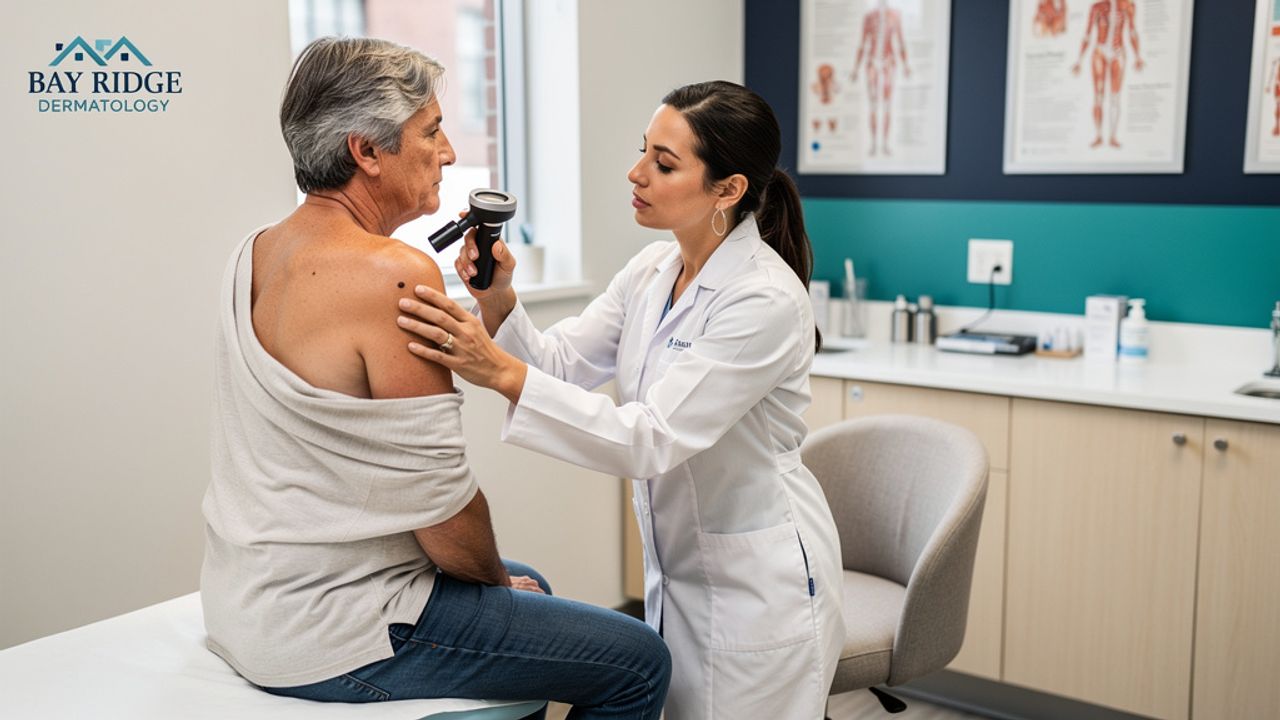
You have probably heard that everyone should get an annual skin cancer screening. It sounds simple, responsible, and safe. But the reality is more nuanced than that. In 2023, the U.S. Preventive Services Task Force reviewed the evidence and concluded there is not enough data to recommend routine visual skin exams for every adult without a personal or family history of skin cancer. That does not mean screenings are useless. It means the right schedule depends on you, your skin, your history, and your risk factors. A one-size-fits-all approach misses the people who need more attention and over-schedules the people who don't.
Most People Don't Need a Yearly Check
According to Harvard-affiliated dermatologist Dr. Katherine Brag, about 80% of adults can safely get a skin check every two to three years rather than annually. If you have no personal history of skin cancer, no first-degree relatives who have had melanoma, fewer than 50 moles, and no history of blistering sunburns or tanning bed use, you likely fall into this majority. That is genuinely good news. It means you can skip the guilt if you have not been in for a screening this calendar year. But "lower risk" does not mean "no risk," and it definitely does not mean you should ignore changes on your skin. If something new shows up or something familiar starts to look different, that is your cue to come in regardless of when your last visit was.
Who Should Be Screened More Often
Some people do need annual screenings, and some need them even more frequently. You fall into a higher-risk category if you have a personal history of melanoma or other skin cancers, a first-degree relative with melanoma, a history of using tanning beds (especially before age 35), fair skin that burns easily, a large number of moles (50 or more), or a weakened immune system from medication or illness. If any of these apply to you, yearly skin exams are a smart baseline, and your dermatologist may recommend visits every six months depending on your specific situation. The screening itself is quick and painless. We examine your skin from scalp to soles, looking for moles or lesions with irregular borders, uneven color, or changes in size.
Skin Cancer Looks Different on Different Skin
Brooklyn is one of the most diverse communities in the country, and that diversity matters in dermatology. Melanoma is roughly 30 times more common in White individuals than in Black individuals, according to a 2023 JAMA systematic review. But here is the critical part: when melanoma does occur in people with darker skin, it is often diagnosed at a later, more advanced stage. That delay makes treatment harder and outcomes worse. Part of the reason is that skin cancer on darker skin tends to appear in less obvious locations, like the palms of the hands, soles of the feet, or under the nails. Another part is that many screening guidelines were built around data from predominantly White populations. If you have darker skin, knowing what to watch for is especially important, and so is finding a dermatologist who understands how skin cancer presents across all skin tones.
What to Watch for Between Visits
Whether you come in every year or every three years, you are your own best early warning system. Get familiar with the ABCDEs of melanoma: Asymmetry (one half of a mole does not match the other), Border irregularity (edges are ragged or blurred), Color variation (multiple shades of brown, black, red, or white in one spot), Diameter larger than a pencil eraser, and Evolution (any mole that is changing in size, shape, or color). Also pay attention to sores that do not heal within a few weeks, new growths that appear suddenly, or spots that itch, bleed, or crust over. You do not need to diagnose anything yourself. You just need to notice and then pick up the phone.
Finding Your Right Schedule
The best screening schedule is the one that matches your actual risk, not a generic recommendation you read online. When you come in for a skin check at our Bay Ridge office, we talk through your history, look at your skin, and help you decide how often you should be seen going forward. For some patients that means every six months. For others, every two to three years is plenty. The goal is to catch problems early, when treatment is simplest and outcomes are best, without creating unnecessary worry in between. Your skin tells a story, and we are here to help you read it.
If you are not sure when your last screening was, or if you have noticed something on your skin that concerns you, now is a great time to come in. Schedule your visit with Bay Ridge Dermatology. Book online at app.nexhealth.com/appt/bayridgedermatology or call (347) 497-4984.