
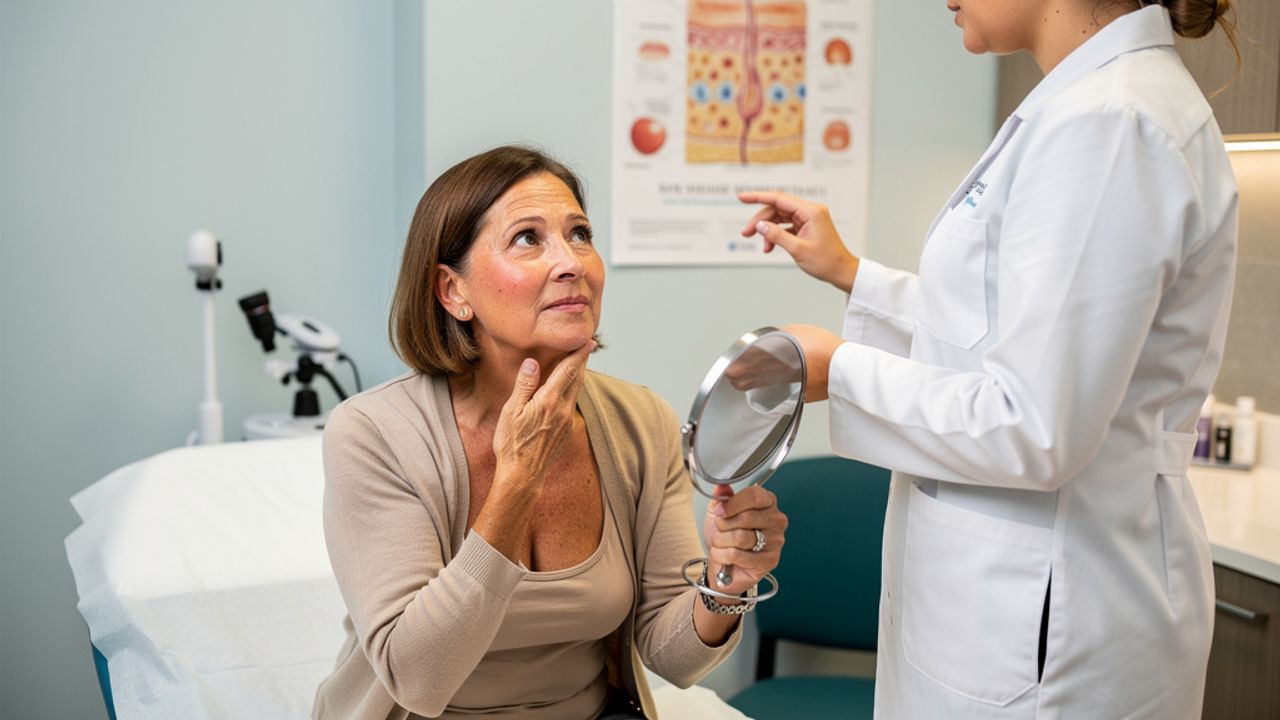
Acne is supposed to be a teenage problem. So when it shows up at 48, alongside dry patches, thinning hair, and skin that suddenly reacts to products you have used for years, it can feel like your body flipped a switch nobody warned you about. You are not imagining it, and you are far from alone. According to NewBeauty's Winter 2026 State of Aesthetics Report, 74.3% of women navigating menopause are now actively interested in professional skin treatments. That number reflects something we see every week in our Bay Ridge office: hormonal skin change has become one of the top reasons women walk through our door.
Your Skin May Signal Menopause Before Anything Else Does
Here is something most people do not realize: your skin can start changing years before hot flashes or irregular periods show up. A 2026 analysis in Dermatology Times by Maddi Hebebrand, MC, and Glynis Ablon, MD, FAAD, found that perimenopausal skin and body composition changes may actually precede classic menopausal symptoms by years. That means persistent dryness, new sensitivity, texture changes, or hair thinning could be your body's earliest signal that hormone levels are shifting. For many women, the dermatologist's office becomes the first place those changes get noticed and named. We take that role seriously. When your skin is telling a bigger story, we want to help you read it.
Menopausal Acne Is More Common Than You Think
Breakouts at midlife are not rare. According to Dermatology Times (April 2025), acne affects 12% to 22% of menopausal women, compared to just 3% of men in the same age group. That gap is almost entirely driven by hormonal fluctuations, specifically the drop in estrogen relative to androgens that happens during perimenopause and menopause. The acne itself often looks different from the breakouts you had as a teenager. It tends to cluster along the jawline and chin, flares unpredictably, and can be deeper and more painful. Standard over the counter acne washes rarely touch it, because the root cause is hormonal, not bacterial. We build treatment plans around what is actually driving your breakouts, not just what they look like on the surface.
Why Your Old Skincare Routine Stopped Working
Estrogen plays a direct role in collagen production, moisture retention, and skin barrier function. As estrogen declines, your skin produces less oil, holds less water, and repairs itself more slowly. Products that worked beautifully for a decade can suddenly cause stinging, redness, or flaking. This is not your imagination or a bad product. Your skin's needs have genuinely changed. NewBeauty's report backs this up: 70.5% of menopausal women are now seeking topical products designed specifically for this stage of life. The right approach often means simplifying your routine, switching to barrier repair ingredients like ceramides and hyaluronic acid, and layering in targeted treatments that support what your skin can no longer do on its own.
Treatments That Match Where Your Skin Is Now
Menopausal skin responds well to treatments that rebuild structure and calm inflammation. In our office, we use energy based devices that stimulate collagen at a deeper level, which is exactly what declining estrogen makes harder for your body to do naturally. Botox can soften lines that seem to have appeared overnight, and it works especially well when combined with medical grade skincare tailored to hormonally changing skin. For concerns like increased dryness, rosacea flares, or pigmentation shifts, we customize your plan based on what your skin needs right now, not what worked five years ago. Every treatment starts with a conversation about your full picture, including your health history, your goals, and what feels manageable for your life.
Your Dermatologist Sees the Whole Picture
Research from Dr. Glynis Ablon and colleagues highlights that truly understanding midlife skin sometimes requires looking beyond standard hormone panels. Evaluating adrenal hormones like DHEA and cortisol, and considering the timing of those tests, can reveal patterns that a single lab draw might miss. We are not replacing your gynecologist or endocrinologist. But we can recognize when your skin concerns point to something hormonal and help coordinate your care. If a treatment is not working the way it should, we dig deeper rather than just switching products.
Your skin at 50 is not broken. It is operating under a completely different set of hormonal instructions than it was at 30, and it deserves care that reflects that. If your routine has stopped working, if breakouts have returned, or if your skin just feels unfamiliar, you do not have to figure it out alone.
Schedule your visit with Bay Ridge Dermatology, book online at app.nexhealth.com/appt/bayridgedermatology or call (347) 497-4984.